Develop your
next patent, publication, article, book, or color revolution.
Schedule: Please contact me for available times.
Place: In-person and online.
Privacy & Security: No AI training models, no big tech apps or spyware, and use a pseudonym if you like.
Contact: [email protected]
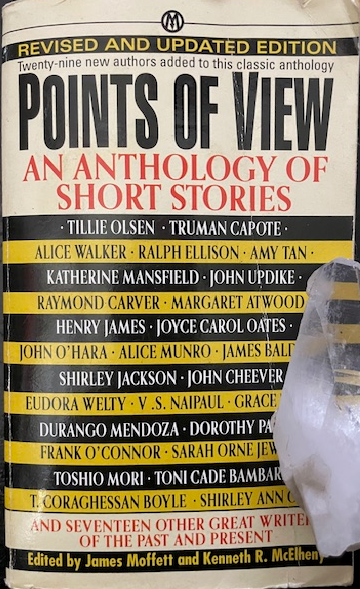
Discuss short stories and narrative techniques that include unreliable narrators, aporia, interior monologue, dramatic monologue, letter narration, diary narration, subjective narration, detached autobiography, memoir, anonymous narration, dual character point of view, multiple character point of view, no character point of view, and more.
Time: Various times may be available.
Platform: Signal and other platforms, or in-person.
Flow: Enjoy expressing your understanding of the text. Try to facilitate conversations with engaging questions and friendly feedback.
Contact for more info
Enjoy the process of discussing great literature. No expertise required.
Forget AI. Just express what you think.
The theme of unreliable narrators offers many great options, and this week's story
continues to be read and performed over a century from its publication.
Text: "The Nose" by Gogol
「鼻」 ニコライ・ゴーゴリ
Nikolai Gogol uses common settings to stage events that resist easy interpretation. Join Kovalyov as he struggles to recover his nose, which goes missing and takes him on an absurd chase around a city.
If you haven't seen William Kentridge's setting for The Nose (Met Opera), here is a preview of Shostakovich's masterpiece:
「英語力への不安から、海外市場や重要な議論で主導権を握れない」——多くの技術者やビジネスリーダーが直面するこの課題の本質は、発音やスピードではありません。グローバルな舞台で成果を出すリーダーは、早口で話す人ではなく、独自の視点(Point of View)を持ち、ストーリーテリングと対話の手法で信頼関係を築ける人です。
先端AI開発企業、大手グローバル製造業、中央銀行・金融機関、そして国内外トップビジネススクール(MBA)やエグゼクティブプログラムでの指導実績を基に、文学や学術ライティングの論理構造、ソクラテス式対話(問答法)を応用した実践的コーチングを提供。すでに持っている技術的知見を「人を動かし、新たな可能性を開くナラティブ」へと昇華させます。
※指導で扱うプレゼンテーション原稿や業務データは、守秘義務(NDA)基準に基づき安全に管理されます。外部AIモデルの学習や第三者への共有に利用されることは一切ありません。
現在の業務課題や資料の伝え方をどのように再構成すれば成果を出せるか、具体的なアプローチを体感いただく「2ステップ・セッション(無料)」を実施しています。
※都内近郊のオフィス、ご希望のカフェ・ラウンジ等にお伺いします(オンライン調整も可能です)。
お問い合わせ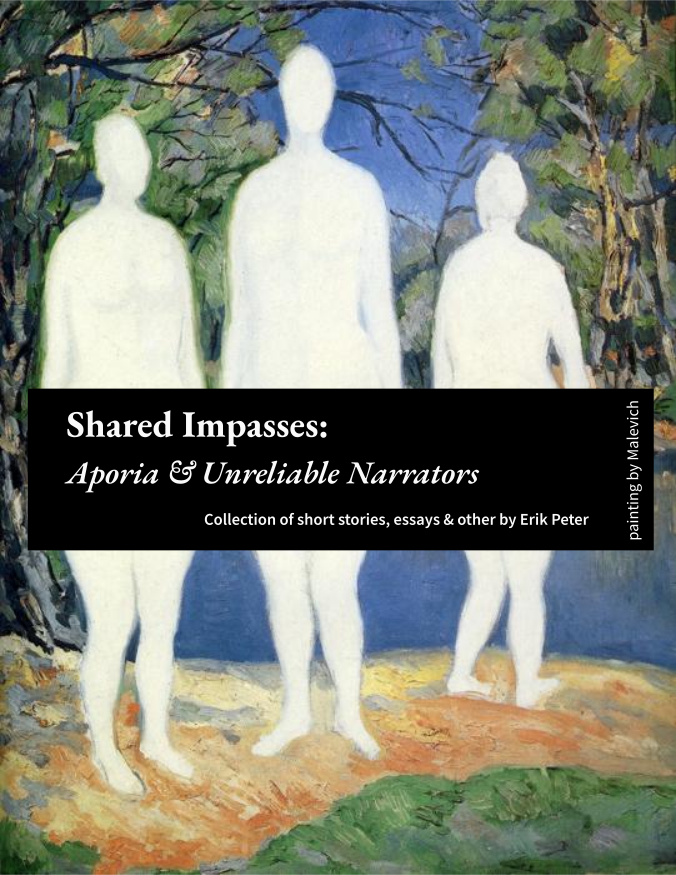
1914 painting by Malevich, who showed the architecture of unreliable narrators in his Manifesto of Suprematism.
Order Book: Contact by email.
Syllabus: https://lab.erikpeter.me/Shared-Impasses-Syllabus.pdf
Schedule: Ongoing, contact for times.
Place: Online or in-person, never in AI!
Cost: Please contact for details.
Contact: [email protected]
Our best stories often come from unreliable narrators, which may be absurd, demented, pathological, playful,
Socratic, or confuse us for other reasons. Going back to Socrates in Plato's Phaedrus:
"enormous advantages now come to us through madness once it is given as a divine gift.
In fact, the prophetess at Delphi and the priestesses at Dodona do a great deal of good for Greece,
both privately and publicly, when they are mad, but they accomplish little or nothing
when they are sound-minded." (244 b)
Mania can be a blessing, and aporia may cause us to pause, reexamine our assumptions, and reveal something new.
Join and discuss classic authors (workshop: [email protected]) like Dostoevsky, Gilman, Poe, Plato, Plotinus, Gogol, Akutagawa
and others. How do various unreliable narrators function as tools for discovery?
What is the value of aporia?